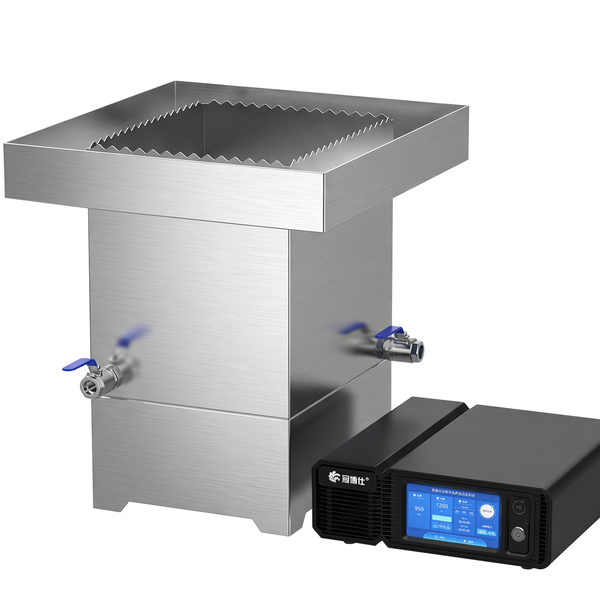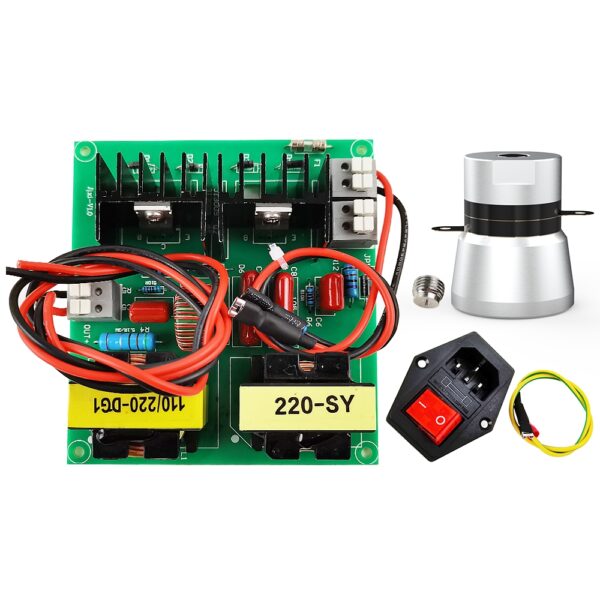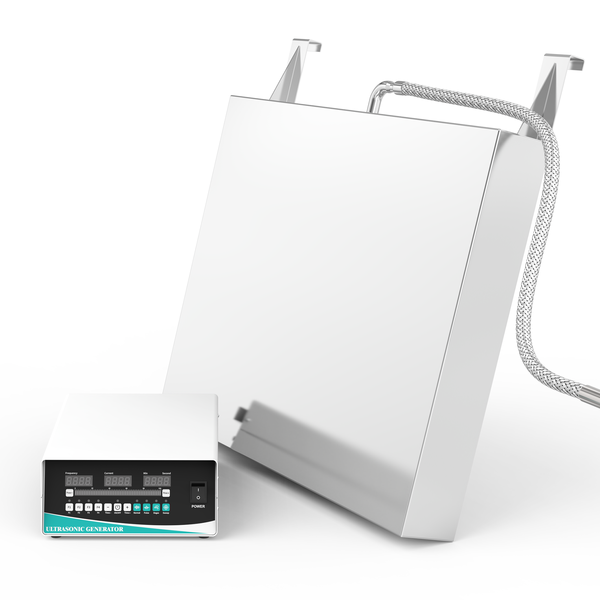

Ultrasonic cleaning can be safely applied to Rolex components, but strictly under the condition that the metal bracelet is detached and cleaned independently; a fully assembled Rolex watch case housing an intact mechanical movement must never be submerged in an ultrasonic tank. While high-grade stainless steel, gold, and platinum alloys withstand high-frequency fluid dynamics without structural compromise, the mechanical escapement, delicate balance assembly, synthetic lubricants, and elastomeric seals inside an assembled watch face severe operational risks when exposed to acoustic energy. Horological maintenance requires an engineering approach that isolates dirt accumulation on articulated exterior hardware while protecting sensitive internal micro-mechanisms from acoustic cavitation shock waves.
Every timepiece operating on a mechanical caliber balances extreme kinetic tolerances within an enclosed hermetic architecture. Dust, epidermal lipids, ambient salts, and microscopic silicate debris inevitably migrate into the links, spring-bar pivots, and clasp interlocks over prolonged wear. When these contaminants combine with friction, they generate an abrasive slurry that accelerates hinge pin wear, leading to structural loosening known colloquially as bracelet stretch. Deploying acoustic cavitation represents the most thorough method for stripping away these packed particulates, yet using this technology safely requires an understanding of how acoustic energy interacts with metals, seals, and precision gear trains.
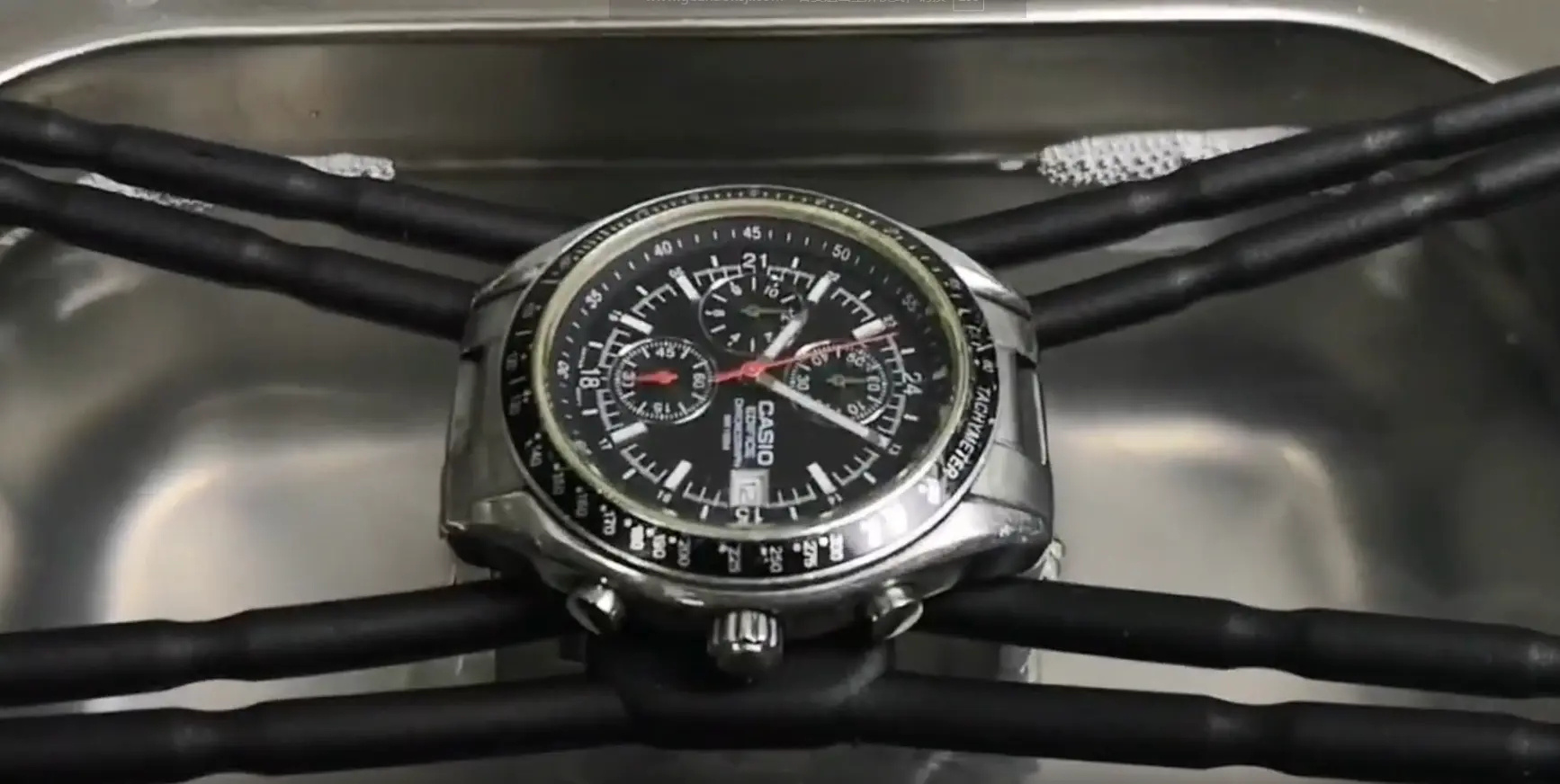
Watch Cleaning
Physics of Acoustic Cavitation in Liquid Media
The mechanism driving fluid decontamination in precision washing baths relies on acoustic cavitation rather than simple liquid circulation or thermal dissolution. Modern ultrasonic cleaning tanks integrate piezoelectric ceramic transducers—frequently lead zirconate titanate (PZT)—bonded mechanically to the exterior underside of a stainless steel basin. When alternating electrical current excites these transducers at specific frequencies, typically between 35 kHz and 48 kHz, the piezoelectric elements expand and contract rapidly, transferring high-frequency longitudinal pressure waves directly into the aqueous medium.
As these ultrasonic compression waves propagate through the bath, they generate alternating high-pressure (compression) and low-pressure (rarefaction) phases across the fluid. During the rarefaction phase, the local pressure drops below the vapor pressure of the liquid, tearing the cohesive structure of the fluid apart and creating millions of microscopic vapor cavities. These micro-bubbles expand across successive acoustic cycles until they reach an unstable resonant size. In the subsequent compression phase, the surrounding liquid collapses these cavities violently within sub-microsecond timeframes, an event recognized in scientific literature as transient cavitation, as documented in Ultrasonic Cleaning (IEEE Technology Navigator).
Upon asymmetric collapse near a solid substrate, such as a 904L stainless steel link, the imploding bubble produces localized acoustic micro-jets that attain instantaneous velocities exceeding 100 meters per second. These fluid micro-jets generate localized pressures of tens to hundreds of megapascals alongside brief, localized thermal spikes. The resulting shear stresses fracture the mechanical adhesion bonds of compacted grime, sebum, dried sweat, and fine particulate matter without requiring mechanical friction from brushes or abrasive agents. This non-contact scouring action allows cleaning solutions to penetrate blind pin recesses, link hinge tolerances, and locking fold-over clasps that remain completely inaccessible to manual instruments.
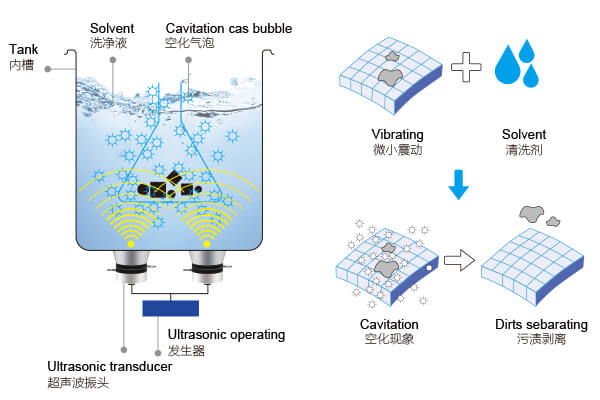
The Principle Behind Ultrasonic Cleaning
Mechanical Movement Vulnerabilities Under Acoustic Wave Exposure
Exposing an assembled watch movement to an active ultrasonic bath initiates severe degradation mechanisms across multiple micro-mechanical interfaces. Automatic calibers, such as Rolex calibers 3135, 3235, or 4130, rely on precisely calibrated synthetic lubricants placed in exact quantities at friction points throughout the movement. The escapement pallets, balance staff pivots, rotor bearings, and gear train train-wheel jewels depend on capillary retention to maintain boundary lubrication layers. When acoustic pressure waves hit the watch case, high-frequency kinetic energy transmits through the metal shell into the internal movement chamber.
This ultrasonic transmission produces micro-acoustic streaming within the movement atmosphere and any surrounding fluid film. Surface-tension boundaries break down, causing critical low-viscosity oils (such as Moebius 9010) and specialized high-pressure greases (such as HP1300) to migrate away from jewel cups, pallet fork impulse faces, and wheel pinions. Once these lubricants disperse across the plates or dial surfaces, the movement components operate under unlubricated metal-on-metal or metal-on-ruby friction, resulting in accelerated galling, severe amplitude drops, and eventual gear train seizure, as detailed in horological mechanical watch cleaning guidelines.
Beyond lubricant displacement, mechanical timepieces contain sensitive harmonic oscillators. The hairspring—such as the blue Parachrom hairspring crafted from a niobium-zirconium alloy—is formed from a ribbon of metal mere hundredths of a millimeter thick. High-frequency acoustic vibrations can induce secondary resonance modes within the delicate coils of the spring. These erratic oscillations risk causing the coils to entangle, permanently deform, or shatter the microscopic hairspring studs. Concurrently, the balance staff pivots, measuring between 0.07 mm and 0.10 mm in diameter, sit within shock-absorbing jewel assemblies (such as Paraflex or Kif shock systems). Ultrasonic shock waves can displace these pivots off-center or drive the pallet stones out of their shellac adhesive bonds, instantly disabling the escapement mechanism.
- Lubricant Dispersal: Cavitation and acoustic streaming compromise surface tensions, stripping micro-lubricants from balance pivots and gear train jewels.
- Oscillator Resonance: Acoustic frequencies can cause harmonic interference in balance hairsprings, causing geometric tangling or permanent pitch distortion.
- Fastener Backout: Sustained vibration can loosen bridge screws, oscillation weight retaining clips, and balance bridge regulation screws.
- Shellac Dissolution: Fluid ingress combined with cavitation energy can crack or liquefy the shellac securing pallet jewels and impulse pins.
Watch Case Hermeticity Versus Dynamic Cavitation Pressures
A prevalent misconception among watch owners is that a timepiece rated for substantial depth immersion can effortlessly endure ultrasonic submersion. Factory depth ratings, whether 100 meters for an Oyster Perpetual or 300 meters for a Submariner, represent static hydrodynamic pressure tolerances verified under controlled laboratory criteria defined by standard testing protocols, as highlighted in Water Resistant Watch Ratings Explained (Noah’s Fine Watches & Jewelry). Static laboratory tests do not simulate the dynamic, concentrated micro-pressures produced by acoustic cavitation.
Hermetic integrity in modern Oyster cases depends on synthetic elastomer O-rings situated at the caseback rim, crystal perimeter, and crown assembly (featuring either Twinlock or Triplock sealing systems). Over time, these elastomer compounds—typically nitrile rubber (NBR) or fluorocarbon elastomers (FKM)—undergo natural compression set, oxidative hardening, and chemical degradation from exposure to skin oils, cosmetics, and thermal shifts. While aged gaskets may maintain an adequate air seal against static barometric pressure, they are structurally unequipped to deflect the focused kinetic energy of collapsing cavitation bubbles.
When cavitation micro-bubbles collapse directly against the narrow boundary where the winding crown seats against the case tube, the localized micro-jet pressures can deflect the pliable rubber gasket. Even an infinitesimal elastomeric deformation lasting milliseconds permits an intake of fluid into the winding tube. Once moisture enters the casing, it immediately condenses on the underside of the sapphire crystal, initiates rapid surface oxidation across steel pinions and luminous dial indices, and causes hydraulic fouling within the mainspring barrel.
Standardized Protocol for Ultrasonic Cleaning Rolex Bracelets
Restoring articulated watch bracelets requires a systematic engineering protocol that completely isolates the watch head while optimizing cleaning efficiency across the solid links, hollow end-links, screw pins, and deployant clasp assemblies. Compact benchtop ultrasonic cleaning equipment provides an ideal platform for this maintenance procedure when operated within strict horological boundaries.

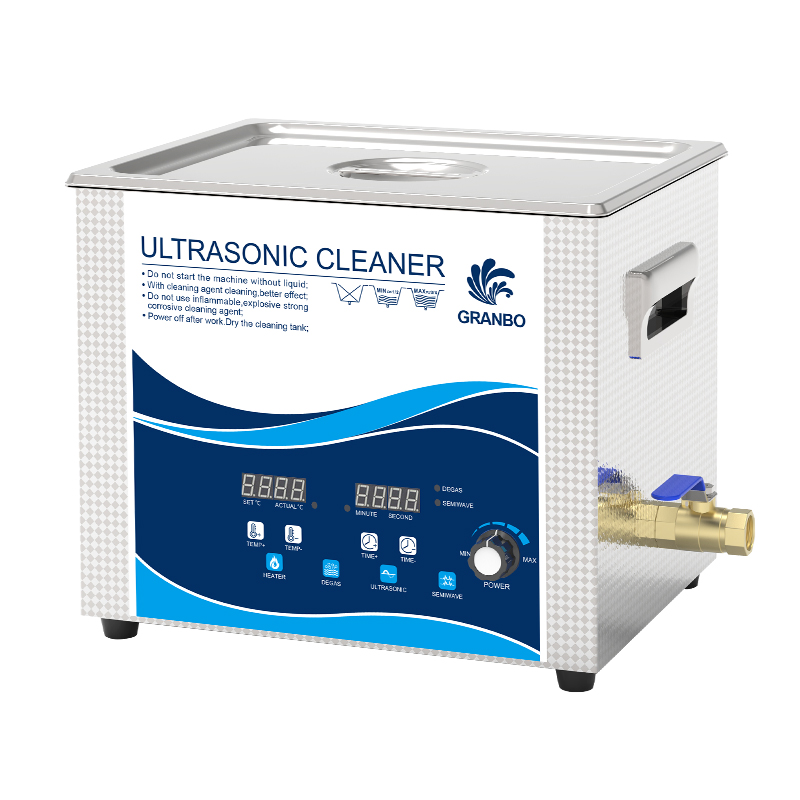
Click to view: 3.2L Benchtop 40kHz Ultrasonic Cleaner with 150W Power Control for Small Hardware, Manicure Tools & Optical Components
Before introducing any metal component to the cleaning bath, complete mechanical separation of the bracelet from the case is non-negotiable. Using a dedicated spring-bar plier tool or a fine horological screwdriver matching the lug access profile, compress the spring-loaded pins or unthread the lug screws to free the end links cleanly from the watch case. Set the case, movement, and spring bars aside in a clean, dust-free enclosure. Place the detached bracelet, clasp assembly, and any loose sizing links into a suspended stainless steel mesh basket or fixturing tray. Never permit components to rest directly on the bottom of the ultrasonic tank; direct contact disrupts transducer resonance patterns, reduces acoustic efficiency, and creates contact abrasion marks on both the tank lining and polished metal surfaces.
Fluid chemistry plays a crucial role in preventing surface discoloration or chemical etching on high-luster horological alloys. Fill the tank with distilled or demineralized water mixed with a small quantity of specialized, neutral-pH surfactant formulation free of ammonia, chlorine, or harsh caustic alkalis. Specialized formulations facilitate acoustic wave propagation while emulsifying organic oils without degrading polished or brushed surfaces, aligning with established guidelines for precious metal jewelry compatibility. Execute a 5-minute preliminary degassing cycle prior to loading the parts; degassing eliminates dissolved atmospheric gases that cushion cavitation bubble implosions and reduce acoustic energy transmission.
- Step 1: Mechanical Separation: Detach the bracelet from the watch head using a precision fork tool or micro-screwdriver, securing the case head away from all liquids.
- Step 2: Component Suspension: Arrange the bracelet links inside an elevated mesh basket, avoiding overlapping parts that could scratch high-polish center links.
- Step 3: Bath Formulation and Degassing: Fill the tank with demineralized water and a non-ammoniated neutral surfactant, activating the degas mode for 5 minutes.
- Step 4: Controlled Cavitation Cycle: Lower the basket into the bath and run an ultrasonic cycle at 40 kHz to 48 kHz for 3 to 5 minutes at an operational temperature not exceeding 40°C (104°F).
- Step 5: Post-Cleaning Rinse: Remove the bracelet and submerge it in a separate clean deionized water rinse bath to displace dislodged contaminants and surfactant residue.
- Step 6: Dewatering and Inspection: Dry the assembly completely using oil-free filtered compressed air or lint-free microfiber towels, followed by a manual torque inspection on all link threaded pins.
After the ultrasonic cycle finishes, residual debris suspended in the bath fluid can re-settle on the metal links unless rinsed immediately. Flushing the bracelet through clean running water or an auxiliary deionized ultrasonic bath washes away micro-grit from inner link pins. When drying, focus warm air through the screw link gaps to eliminate moisture traps that promote galvanic corrosion between dissimilar internal screws and outer sleeves. Re-tighten all bracelet link screws, checking threads for signs of wear and applying a minute droplet of low-strength horological thread-locking compound (such as Loctite 222) if recommended by factory service specifications.
Equipment Selection Parameters for Fine Horological Components
Selecting suitable ultrasonic cleaning hardware requires matching acoustic wave performance to the structural characteristics of horological metals. Transducer operating frequency represents the primary design variable influencing cleaning precision and substrate safety. Industrial ultrasonic washers operating at 20 kHz to 28 kHz generate large, highly violent cavitation bubbles that produce high-impact surface shearing suitable for heavy castings or automotive blocks; however, these low frequencies risk causing surface pitting and micro-erosion on high-polish gold, platinum, or fine chamfered stainless steel edges.
In contrast, benchtop ultrasonic systems functioning between 40 kHz and 48 kHz generate much smaller, highly distributed cavitation voids that penetrate micro-tolerances cleanly without generating aggressive surface erosion. The higher frequency creates a denser, more uniform acoustic field capable of removing tenacious organic residues from internal link channels. For individuals evaluating hardware for fine instruments, reviewing a comprehensive benchtop ultrasonic equipment evaluation assists in selecting systems equipped with sweep-frequency generators that eliminate stationary acoustic hot spots that could concentrate energy unevenly across precious metal surfaces.
| Parameter | 20–28 kHz | 40–48 kHz |
|---|---|---|
| Cavitation Bubble Diameter | Large (~100–150 micrometers) | Fine (~20–50 micrometers) |
| Localized Impact Energy | Severe; high risk of surface micro-erosion | Gentle; non-destructive to delicate finishes |
| Penetration Capability | Coarse cavities and large channels | Micro-gaps, link screw threads, and tolerances |
| Material Suitability | Machined steel, cast iron, engine blocks | 904L steel, gold alloys, platinum, titanium |
| Heater | RT~80°C | RT~80°C |
Safe Non-Submersion Maintenance for Assembled Watch Cases
Because the fully assembled case cannot be placed into an ultrasonic tank, maintaining the exterior cleanliness of the case, crystal, and bezel requires targeted manual decontamination procedures. The Oyster case architecture relies on surface tension barriers that can be maintained using soft non-abrasive tools and controlled aqueous contact. Ensure that the winding crown is fully screwed down against the case tube to seat the elastomeric seals firmly before initiating any surface washing.
Use a soft-bristle natural horsehair or extra-fine nylon horological brush dampened with lukewarm water and a drop of neutral surfactant to clean the case exterior. Gently work the bristles into the caseback fluting, underneath the rotating bezel edges, and around the inner lugs where dirt typically settles. Avoid high-pressure water jets or heavy running tap water, which can create localized hydrodynamic pressure spikes exceeding static seal ratings. Once cleaned, rinse the case using a damp cloth soaked in deionized water, and wipe dry with a soft microfiber cloth.
When a mechanical movement requires comprehensive cleaning, certified watchmakers carry out a full teardown down to individual bridges, wheels, and setting levers. These disassembled steel and brass components are then placed inside specialized multi-jar watch cleaning machines that move parts through timed cycles of ultrasonic baths and solvent-based rinses (such as mineral solvent cleaners and anhydrous rinses) followed by filtered heated air drying. Only after complete disassembly, thorough decontamination, reassembly, and epilame surface treatment are synthetic horological lubricants precisely reapplied to the friction points using microscopic oilers.
Component Longevity and Preventive Maintenance Engineering
Articulated bracelets and deployant clasps represent high-stress wear components that benefit significantly from regular ultrasonic cleaning cycles. The primary mechanism driving premature bracelet elongation is abrasive grinding caused by trapped environmental particulates. As an individual wears a timepiece, microscopic quartz particles, mineral dust, and skin flakes blend with perspiration to create an abrasive paste inside the pin channels. With each movement of the wrist, this compound grinds against the internal pins and the inner walls of the link bores, slowly shaving microns of metal away.
Executing an ultrasonic cleaning cycle on the detached bracelet every six to twelve months removes this abrasive paste entirely, preventing irreversible link clearance expansion and maintaining the structural integrity of the bracelet over decades of wear. Concurrently, regular water-resistance testing on a dry pressure testing apparatus ensures that the watch case maintains its intended hermeticity against normal ambient moisture exposure. By treating the metal bracelet and the internal mechanical caliber as distinct operational environments requiring separate maintenance methodologies, horological collectors and technicians preserve both aesthetic brilliance and mechanical precision without compromise.
References
- Ultrasonic Cleaning (IEEE Technology Navigator)
- Water Resistant Watch Ratings Explained (Noah’s Fine Watches & Jewelry)
- Can You Put an Automatic Watch in an Ultrasonic Cleaner? Complete Guide for Safe Cleaning – Granbo
- What Jewelry Can Go in an Ultrasonic Cleaner? A Practical Guide for Safe and Effective Cleaning – Granbo
- Do I Need an Ultrasonic Cleaner? Understanding Its Value at Home and Work – Granbo